
Quick Audience Profit System
Turn Products Into Live Sales—Without Spending Years Building an Audience

The Quick Audience Profit System is a training and mentorship program created by Rachel Rofe. It teaches people how to source physical products, sell them during live Whatnot shows, fulfill their orders, and develop a community of returning buyers.
The idea behind it is refreshingly straightforward: instead of building a store and then searching for customers, you bring your products to a marketplace where shoppers are already browsing.
You do not necessarily need a large social media following. You may not even need to show your face. What you do need is a sensible product, a workable margin, and the willingness to run the business consistently.
Beginner-friendly training · Face-free selling options · No large following required
Quick Audience Profit System at a Glance
| Program detail | Information |
|---|---|
| Product name | Quick Audience Profit System |
| Creator | Rachel Rofe |
| Business model | Live selling and physical-product reselling |
| Main platform | Whatnot |
| Core process | Source, show, ship, and develop repeat buyers |
| Training format | Online lessons, tools, templates, coaching, and community |
| Previous experience needed | Designed to accommodate beginners |
| Existing audience required | No large audience is required to begin |
| Face required on camera | Not necessarily |
| Physical inventory required | Usually, although sellers may start with items they already own |
| Passive income | No—this is an active e-commerce business |
| Current listed price | $2,497 upfront or three payments of $997 |
| Guarantee | 60-day action-based satisfaction guarantee with conditions |
| Official product domain | QuickAudience.com |
Offer details were last checked in July 2026. Prices, bonuses, payment plans, and guarantee terms can change. Verify everything on the official offer page before purchasing.
What Is the Quick Audience Profit System?
The Quick Audience Profit System is an online business-training program built around live commerce.
In simple terms, it teaches participants how to find physical products and sell them through live video on Whatnot. Buyers can watch the show, ask questions, place bids, and purchase items while the seller is presenting them.
That makes it different from opening a traditional e-commerce store.
With a standalone store, your first problem is usually traffic. You can have a beautiful website and excellent products, but none of that matters if nobody visits. Sellers often spend months publishing content, learning advertising, or trying to build an audience on social media.
Quick Audience takes a different route. It starts with a marketplace that already has active shoppers.
Here’s what most people don’t know: having access to an audience does not automatically create a profitable business. It simply removes one major obstacle. The seller must still select good products, understand costs, communicate clearly, and ship orders reliably.
The program is intended to provide a structured path through those responsibilities. It combines recorded training with tools, show templates, implementation guidance, coaching sessions, and community support.
It is not an automated money-making application. It does not press a button and generate sales. It teaches an active product-based business.
What Is Whatnot?
Whatnot is a live-shopping marketplace where sellers present physical products through video broadcasts.
Think of it as a cross between an online marketplace, a live auction, and a small home-shopping channel. The difference is that almost anyone who meets the platform’s requirements can apply to become a seller.
During a live show, buyers can:
- Watch products being demonstrated
- Ask questions in real time
- Participate in auctions
- Purchase fixed-price items
- Follow sellers
- Return for future shows
- Combine multiple purchases into an order
The interactive format can make shopping feel more personal than scrolling through ordinary product listings. A buyer can see the item, hear the seller explain it, ask about its condition, and decide whether to purchase—all during the same session.
However, Whatnot is still a third-party platform. Sellers must follow its policies, fee structure, shipping standards, and category rules.
Seller approval is not guaranteed. Check the current Whatnot seller application requirements before buying inventory or paying for training.
Why the “Audience First” Model Is Different
The hardest part of many online businesses is not finding something to sell. It is finding someone willing to buy it.
Imagine opening a physical shop in the middle of an empty field. The rent might be affordable and the shelves might look wonderful, but there is no passing traffic. You must persuade people to travel to your shop before you can sell anything.
That is how a new independent e-commerce website often feels.
A marketplace works more like renting a stall inside a busy shopping center. The shoppers are already there. You still need an attractive stall and desirable products, but you are not starting in an empty field.
That is the central idea behind Quick Audience.
It does not mean every show will attract hundreds of viewers. New sellers may begin with a very small room. Some shows will perform better than others, and there may be quiet sessions along the way.
The opportunity comes from being able to start small, receive immediate feedback, and improve through repetition.
How Does the Quick Audience Profit System Work?
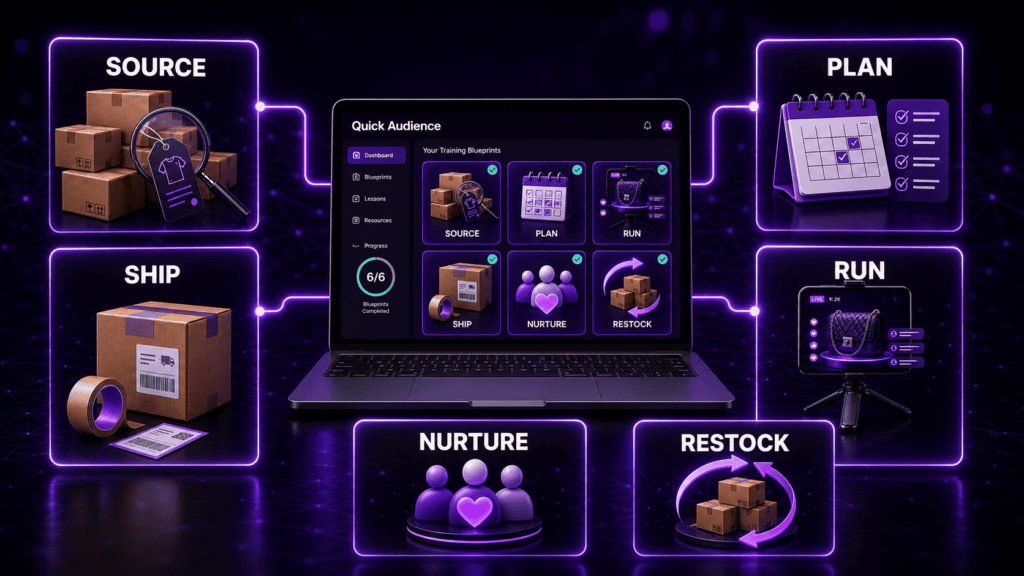
The broader strategy can be understood as three stages: source, show, and ship.
Each stage sounds simple. In practice, every one contains decisions that can affect profit.
1. Source Products People Want
The first step is choosing a category and finding products to sell.
Possible categories include:
- Vintage merchandise
- Clothing and accessories
- Children’s clothing
- Collectibles
- Trading cards
- Toys and building figures
- Coins
- Beauty products
- Handmade goods
- Home and lifestyle products
A product is not automatically good inventory just because it looks interesting or can be purchased cheaply.
A seller must consider:
- How much the item costs
- What buyers may realistically pay
- Whether demand already exists
- How competitive the category is
- How easy the item is to explain
- Whether it can be packed safely
- How much space it requires
- What happens if it does not sell
The biggest mistake people make is purchasing too much inventory before testing demand.
A safer approach is to start with a small batch. Run a show, watch how buyers respond, and expand only after learning what moves at a sustainable price.
2. Plan the Live Show
A successful show begins before the camera turns on.
The seller needs to organize products, prepare listings, decide starting prices, arrange the filming area, and understand the order in which items will be presented.
A basic setup may include:
- A smartphone
- Stable internet connection
- Phone stand or tripod
- Adequate lighting
- Clean table or display area
- Organized inventory
- Packaging materials
- Access to label printing
You do not need to build a television studio in your spare bedroom. Clear lighting and a stable camera matter more than expensive equipment.
The goal is to make products easy to see and the show easy to follow.
3. Run the Show
During the broadcast, the seller introduces products, describes their condition, answers questions, and manages sales or auctions.
This is where new sellers often feel nervous. They imagine they need the energy of a game-show host.
They usually do not.
Some successful sellers are naturally energetic. Others are calm, knowledgeable, and methodical. A coin collector speaking to ten serious buyers may not need the same presentation style as someone running ten-second children’s clothing auctions.
The right style depends on the audience and the product.
To be honest, product knowledge can be more valuable than volume. Buyers want to understand what they are purchasing. A seller who communicates clearly and answers questions honestly can create trust without shouting or performing.
4. Pack and Ship Orders
After the show, the entertainment stops and the operational work begins.
Sold items must be matched with the correct orders, packed securely, labeled, and transferred to the carrier within the platform’s required timeframe.
Fast, accurate fulfillment matters because a seller’s reputation is built after the sale as much as during it.
A charming live show cannot compensate for sending the wrong item or allowing an order to sit unshipped for a week.
Whatnot currently expects sellers to ship within its stated timeframe. Read the latest Whatnot shipping policy before launching.
5. Develop Repeat Buyers
The first sale is useful. A returning buyer is more valuable.
Sellers can encourage repeat customers by:
- Running shows on a consistent schedule
- Selling within a recognizable niche
- Describing products accurately
- Packing orders carefully
- Shipping promptly
- Remembering what their buyers enjoy
- Adding thoughtful, inexpensive package touches
- Keeping followers informed about future shows
Consistency gives buyers a reason to form a habit.
If someone knows that a vintage seller appears every Wednesday evening, they do not need to rediscover that seller by accident. They can plan to return.
6. Restock Based on Evidence
Once products begin selling, the seller can use actual customer behavior to guide future purchases.
This is much safer than guessing.
If one product receives attention but sells only at a very low price, it may not be worth restocking. If another item sells repeatedly with a healthy margin, that is useful evidence.
Restocking should be based on profit and demand—not excitement alone.
What Is Included in Quick Audience?
The program is organized around six practical areas of a live-selling business.
The Source Blueprint
This section focuses on choosing products, researching demand, locating inventory, and evaluating potential margins.
The goal is not simply to find cheap products. It is to find products that can be sold reliably after costs are considered.
The Plan Blueprint
The planning material covers show preparation, inventory organization, scheduling, and the steps required before going live.
This can be particularly helpful for beginners who do not know what a completed show setup should look like.
The Run Blueprint
This section focuses on conducting live shows.
It may include guidance for:
- Opening a show
- Introducing products
- Managing quiet moments
- Answering comments
- Encouraging participation
- Running different show formats
- Closing the session
Templates can reduce anxiety, but they should not turn the seller into a robot. The strongest presenters eventually adapt the framework to their own personalities.
The Ship Blueprint
The shipping material covers the process of organizing sold items, packing orders, printing labels, and creating a repeatable fulfillment workflow.
This may not be the glamorous part of live selling, but it is one of the most important.
The Nurture Blueprint
This section focuses on turning individual buyers into followers and repeat customers.
A small group of buyers who genuinely enjoy a seller’s products can sometimes be more useful than a large but uninterested audience.
The Restock Blueprint
This stage helps sellers decide what to purchase again, what to discontinue, and how to use previous show results when planning inventory.
The goal is to improve decisions with real sales information.
Additional Training and Support
Based on the current offer, Quick Audience may also include:
- Weekly Seller Lab sessions
- Coaching for up to one year
- A private member community
- Product-sourcing resources
- Show scripts and templates
- Private seller tools
- Behind-the-scenes implementation examples
- Show-feedback sessions
- Promotional and visual resources
- Guidance for existing physical-product businesses
The availability and duration of individual components can change. Confirm the current package before enrolling.
Do You Need an Existing Audience?
No large following is necessarily required to begin.
Whatnot already has people browsing categories and discovering scheduled shows. This gives a new seller a possible source of visibility without first building a large Instagram, TikTok, Facebook, or email audience.
But let me explain the distinction: not needing an audience is different from being guaranteed an audience.
A first show might have only a few viewers. That does not automatically make it pointless. One interested buyer can purchase multiple items, follow the seller, and return later.
Over time, attendance may be influenced by:
- Product selection
- Category demand
- Show title and thumbnail
- Schedule consistency
- Previous buyer experiences
- Follower count
- Seller activity
- External promotion
- Marketplace recommendations
The sensible expectation is gradual growth rather than an instant crowded room.
Do You Have to Show Your Face?
Not necessarily.
A seller can point the camera toward a table, product display, or rotating stand while speaking off camera. Buyers can see the merchandise while the seller answers questions using audio.
This approach can work well for:
- Coins
- Trading cards
- Toys
- Jewelry
- Crystals
- Collectibles
- Handmade products
- Vintage items
- Clothing presented on a table
Face-free selling does not mean communication-free selling. The seller still needs to describe products, respond to viewers, and guide the show.
For camera-shy beginners, though, keeping the focus on the products can make starting feel much more manageable.
Is Quick Audience Passive Income?
No.
The Quick Audience Profit System teaches an active e-commerce business. Sellers normally need to:
- Research products
- Purchase or collect inventory
- Prepare listings
- Schedule shows
- Present merchandise
- Answer buyer questions
- Track sold items
- Pack orders
- Ship packages
- Manage customer concerns
- Monitor expenses and profit
Good systems can make this work faster. Experience can make it feel easier. A seller may eventually hire help for packing or inventory management.
Even then, the business does not become a push-button income stream.
That is not necessarily a weakness. Some people prefer active businesses because they receive faster feedback. You can show a product tonight and learn almost immediately whether buyers care about it.
What Does It Really Cost to Start?
The program price is only one part of the total budget.
As of July 2026, the official offer lists:
| Payment option | Listed amount |
|---|---|
| One-time payment | $2,497 |
| Payment plan | Three payments of $997 |
| Total through payment plan | $2,991 |
The payment plan costs more overall, although it divides the expense into smaller payments.
Prospective sellers should also budget for possible business expenses:
- Inventory
- Whatnot selling fees
- Payment-processing fees
- Packaging materials
- Labels and printing
- Lighting or a phone stand
- Storage containers
- Giveaways
- Returns or damaged products
- Applicable taxes
- Unsold inventory
Here’s a simple hypothetical example:
| Example expense | Amount |
|---|---|
| Gross sales from one show | $500 |
| Cost of inventory sold | -$180 |
| Estimated platform and processing costs | -$65 |
| Packaging materials | -$25 |
| Giveaways and promotional costs | -$20 |
| Estimated amount before tax and labor | $210 |
This is only an illustration—not a prediction or an exact Whatnot fee calculation. Actual fees depend on the order, category, buyer location, and current platform policies.
The point is simple: sales are not the same as profit.
A seller can post an impressive revenue number and still keep very little after inventory and operating expenses. The figures that matter are net profit, cash flow, and inventory turnover.
Check the current Whatnot seller fees before setting auction prices.
Who Is Rachel Rofe?

Rachel Rofe is an online entrepreneur and e-commerce educator with experience in physical-product businesses and digital training.
Quick Audience is built around strategies she says she has applied in her own Whatnot operation. The official presentation includes sales and profit figures attributed to Rachel and examples from other sellers.
Those figures should be kept in context.
Strong results can show what happened in a particular business, but they do not establish what a new participant will earn. Rachel has prior experience, established systems, product knowledge, and business resources that a beginner may not have.
A better question is not, “Can I copy someone else’s revenue?”
It is, “Can this process help me make more informed product, selling, and fulfillment decisions?”
That is a far more useful way to approach any business-training program. Learn More About Rachel Rofe
Real-World Seller Examples
The program’s promotional materials include stories from people using different live-selling styles.
Amanda: One Scheduled Vintage Show
Amanda is described as a therapist, mother, and caregiver who sells vintage products and antiques during one scheduled show each week.
Her approach is not based on loud presentations or chasing every new trend. She reportedly developed a smaller community around the products she enjoys sourcing.
The useful lesson is consistency. A predictable show can become an appointment for interested buyers.
Kaleigh: Fast Children’s Clothing Auctions
Kaleigh reportedly started without an existing social audience and sells preowned and new-with-tags children’s clothing.
Her shows use quick auctions designed to move through many affordable items. Instead of depending on one expensive purchase, the format encourages buyers to add several lower-priced products to their carts.
That model relies on organization, speed, and adequate margins.
Brandon: Selling Without Showing His Face
Brandon reportedly works a full-time job and keeps his face separate from his side business.
His camera focuses on a table while he sells coins to collectors. This demonstrates how niche knowledge can matter more than personal visibility.
A collector wants accurate information. The seller’s face may be far less important than knowing the product.
Alyssa: Shows Built Around Family Life
Alyssa reportedly sells Lego minifigures sourced from bulk local purchases.
She places products on a small rotating display rather than keeping herself on camera. Her shows are arranged around her responsibilities as a parent.
The takeaway is flexibility. A live-selling schedule does not always need to resemble a traditional eight-hour workday.
Merre: Experience Still Matters
Merre reportedly began selling online in the late 1990s and later brought that experience to Whatnot.
Her story is a reminder that age is not automatically a barrier. Product knowledge, preparation, and consistency can transfer from one marketplace to another.
Important: These examples come from promotional materials and describe individual experiences. AudiencePilot has not independently audited every figure. They are not typical-results claims or guarantees of future earnings.
Who May Be a Good Fit?
Quick Audience may be relevant to:
- Beginners interested in live commerce
- Existing eBay, Etsy, Poshmark, or marketplace sellers
- Collectors with knowledge of a specific niche
- Boutique owners with existing inventory
- Vintage and secondhand sellers
- Handmade-product creators
- People comfortable speaking during live broadcasts
- Camera-shy sellers willing to speak off screen
- Participants who value coaching and accountability
- People prepared to treat selling as a real business
The system may be especially appealing to someone who has products but struggles to attract shoppers.
Who May Find It Difficult?
The model may be challenging for people who:
- Want completely passive income
- Cannot qualify to sell on Whatnot
- Do not want to speak during live shows
- Dislike packing and shipping products
- Have no room for inventory
- Cannot risk money on unsold merchandise
- Expect immediate large audiences
- Do not have time to run shows consistently
- Want guaranteed earnings
- Prefer owning an independent sales platform
There is nothing wrong with deciding that live commerce does not suit your personality or circumstances. A business model should fit the person running it—not the other way around.
Important Questions to Answer Before Joining
Before purchasing the program, ask yourself:
- Is Whatnot accepting sellers from my location?
- What category do I understand best?
- Can I start with low-risk inventory?
- What is my complete startup budget?
- How many hours can I commit each week?
- Am I willing to speak during a live broadcast?
- Do I have space to organize and store products?
- Can I ship orders consistently?
- What is the minimum profitable price for my products?
- Can I afford the program without using essential living money?
Do not fund a speculative business with money needed for rent, food, healthcare, debt payments, or emergencies.
How Does the 60-Day Guarantee Work?
The current offer describes a 60-day action-based satisfaction guarantee.
This is important: action-based does not necessarily mean unconditional.
The published terms indicate that participants must complete the first three homework assignments to qualify under the satisfaction guarantee. Anyone considering the program should read the current conditions carefully and keep records of completed assignments and support communications.
Guarantee terms can change. Confirm the latest details on the official offer page before purchasing.
For product billing, access, or refund questions, contact the vendor at:
support@quickaudience.com
AudiencePilot does not process purchases or refunds.
What Does the Free Training Cover?
The free Quick Audience training introduces the live-selling business model before asking viewers to consider the complete program.
It may cover:
- Why live shopping is growing
- How Whatnot connects sellers with buyers
- How product-focused shows work
- Ways to sell without showing your face
- Examples from active sellers
- The Source–Show–Ship framework
- What is included in the paid program
- Current access and payment options
Watching the workshop is a sensible first step because it allows you to see Rachel’s explanation directly.
Take notes. Pay attention to the operational details as well as the sales examples. Consider the inventory, time, fees, and fulfillment work involved.
Then decide whether the model fits your budget and personality.
Frequently Asked Questions
What is the Quick Audience Profit System?
It is an online training and mentorship program that teaches participants how to source physical products and sell them through live Whatnot shows.
Who created Quick Audience?
The program was created by online entrepreneur and e-commerce educator Rachel Rofe.
Do I need an existing audience?
No large audience is necessarily required to start. Whatnot has an existing marketplace where shoppers can discover live shows. However, show attendance and sales are not guaranteed.
Do I need to show my face?
Not always. Sellers can point the camera at their products and communicate using audio.
Do I need inventory?
Most sellers need physical products. Beginners may be able to start with personal items or a small test batch before purchasing larger quantities.
Is Quick Audience passive income?
No. Sellers must source products, prepare shows, communicate with buyers, pack orders, and ship merchandise.
Does the system guarantee sales?
No. Results depend on product demand, pricing, margins, presentation, consistency, buyer experience, expenses, and other factors.
How much does the program cost?
As of July 2026, the offer lists a one-time payment of $2,497 or three payments of $997. Verify the current price before purchasing.
Is coaching included?
The current offer describes weekly Seller Lab sessions and access to coaching and support for up to one year. Confirm the current inclusion details on the offer page.
Does Whatnot charge seller fees?
Yes. Whatnot deducts applicable commission and payment-processing fees from completed transactions. Fee rates can vary by category and location.
Can I start with products I already own?
Potentially. Starting with suitable items you already own may reduce initial inventory risk while you learn how the platform works.
Final Thoughts
The Quick Audience Profit System is built around a practical observation: finding buyers is often harder than finding products.
By using a live marketplace, sellers can present merchandise directly to people who are already browsing and ready to interact. That removes some of the traffic-building work associated with a traditional independent store.
It does not remove the business work.
Products still need to be sourced carefully. Shows need to be planned. Orders need to be packed and shipped. Margins need to be calculated. Buyers need to be treated well.
For someone who enjoys products, communication, and hands-on business activity, live selling may be worth exploring. For someone seeking automated or guaranteed income, it is unlikely to be the right model.
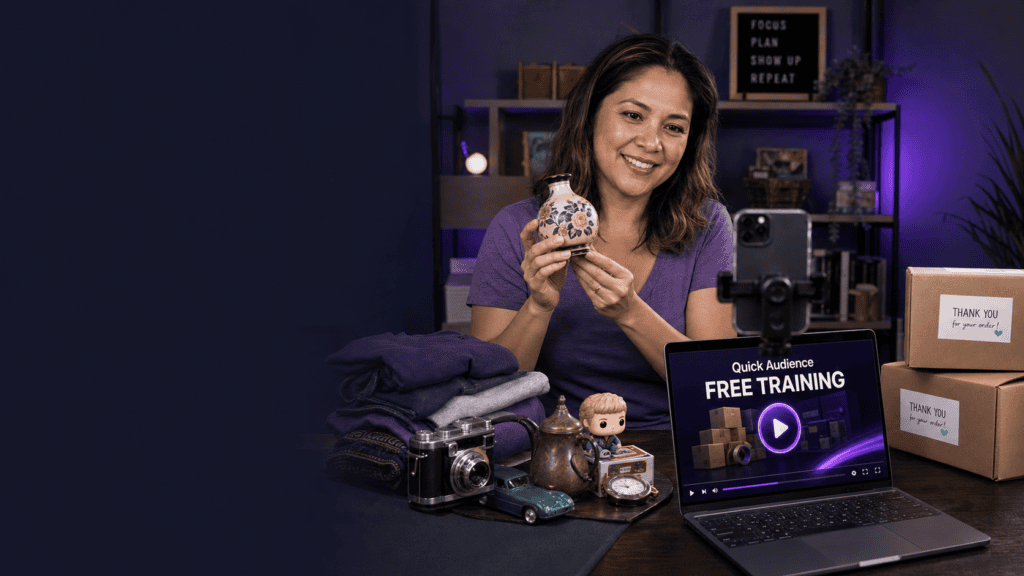
The free training is the logical place to begin. Watch how the process is explained, calculate the complete cost, and make your decision without rushing.